Our Stories Cannot Be Unlistened To
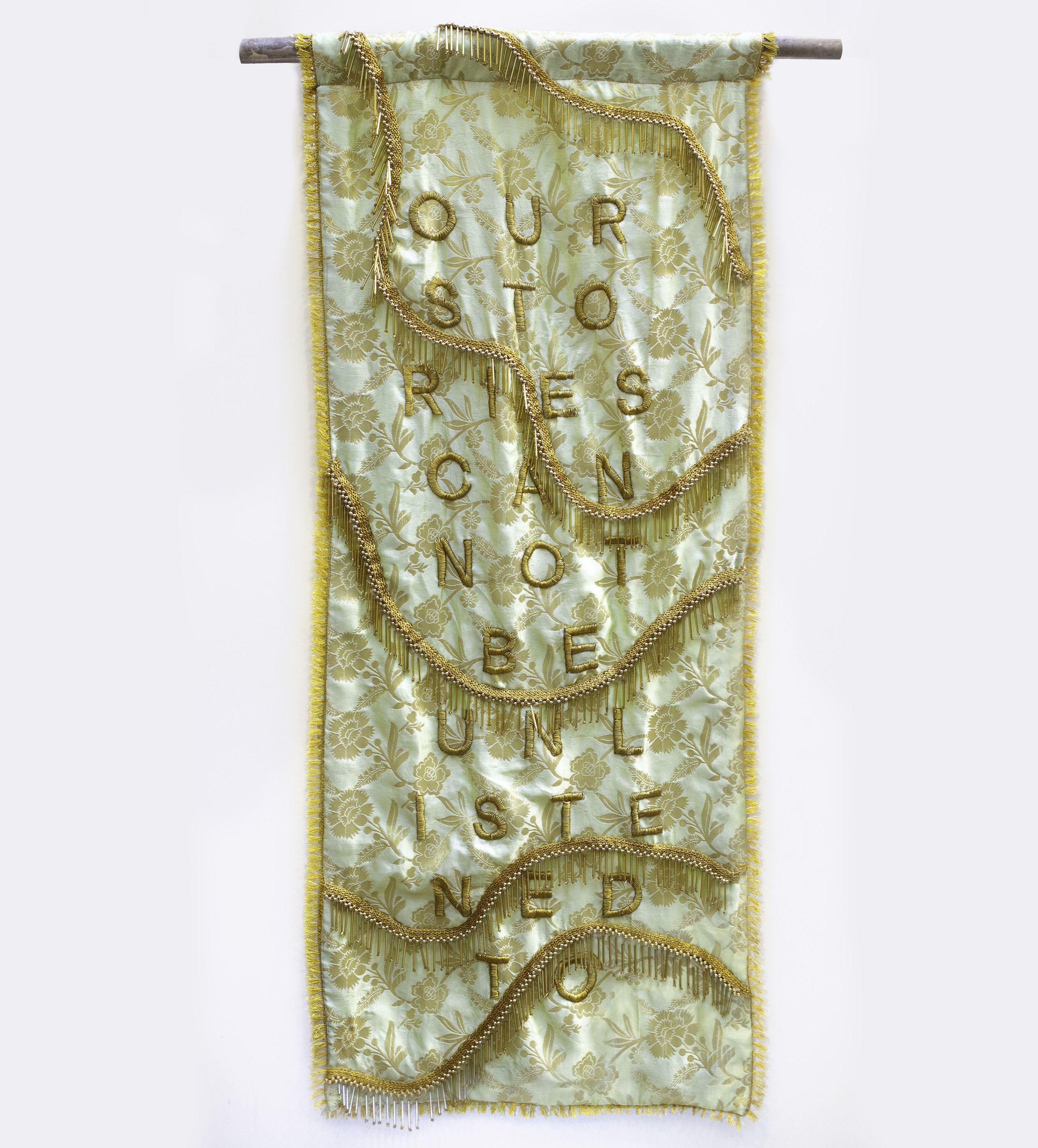
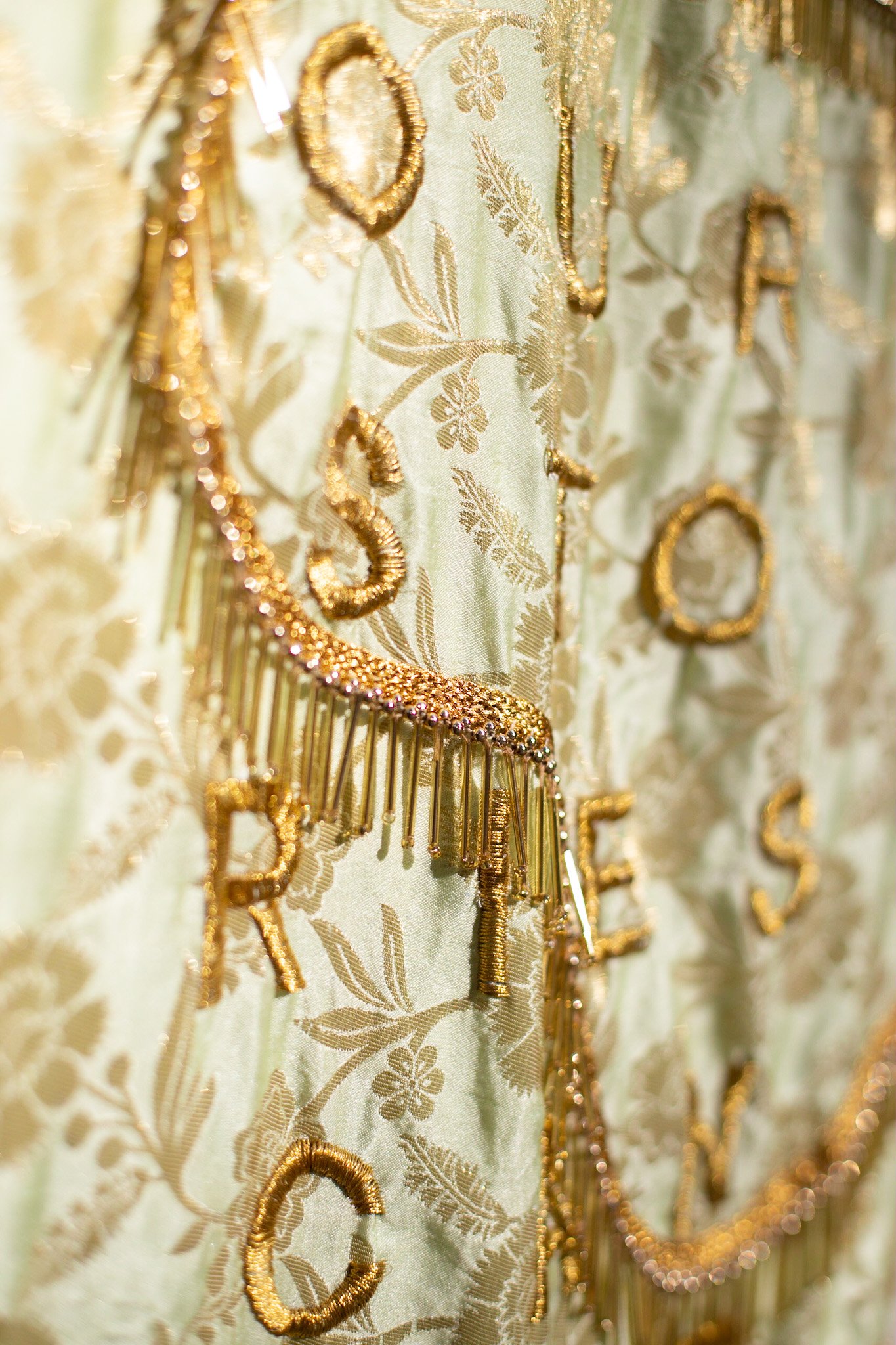
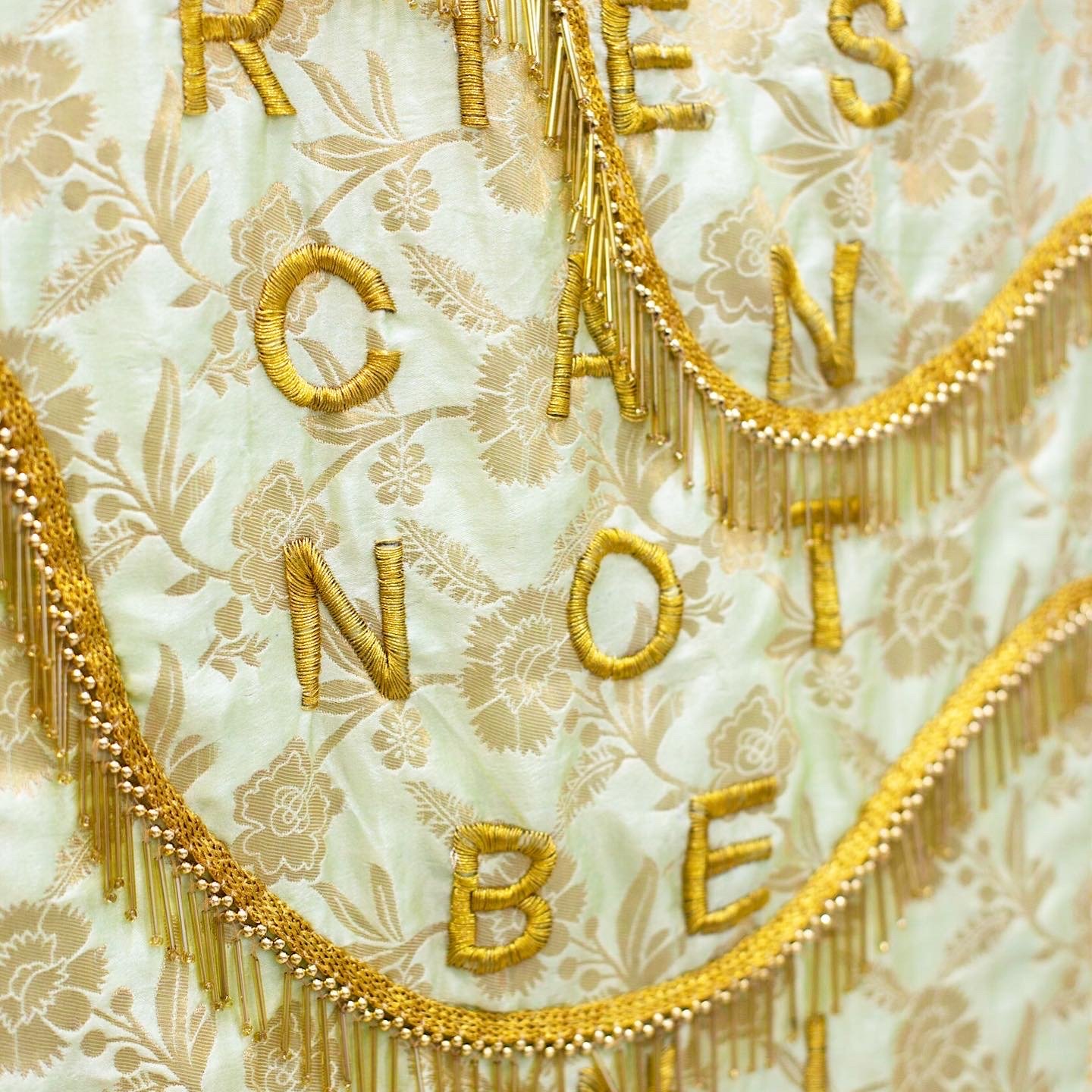
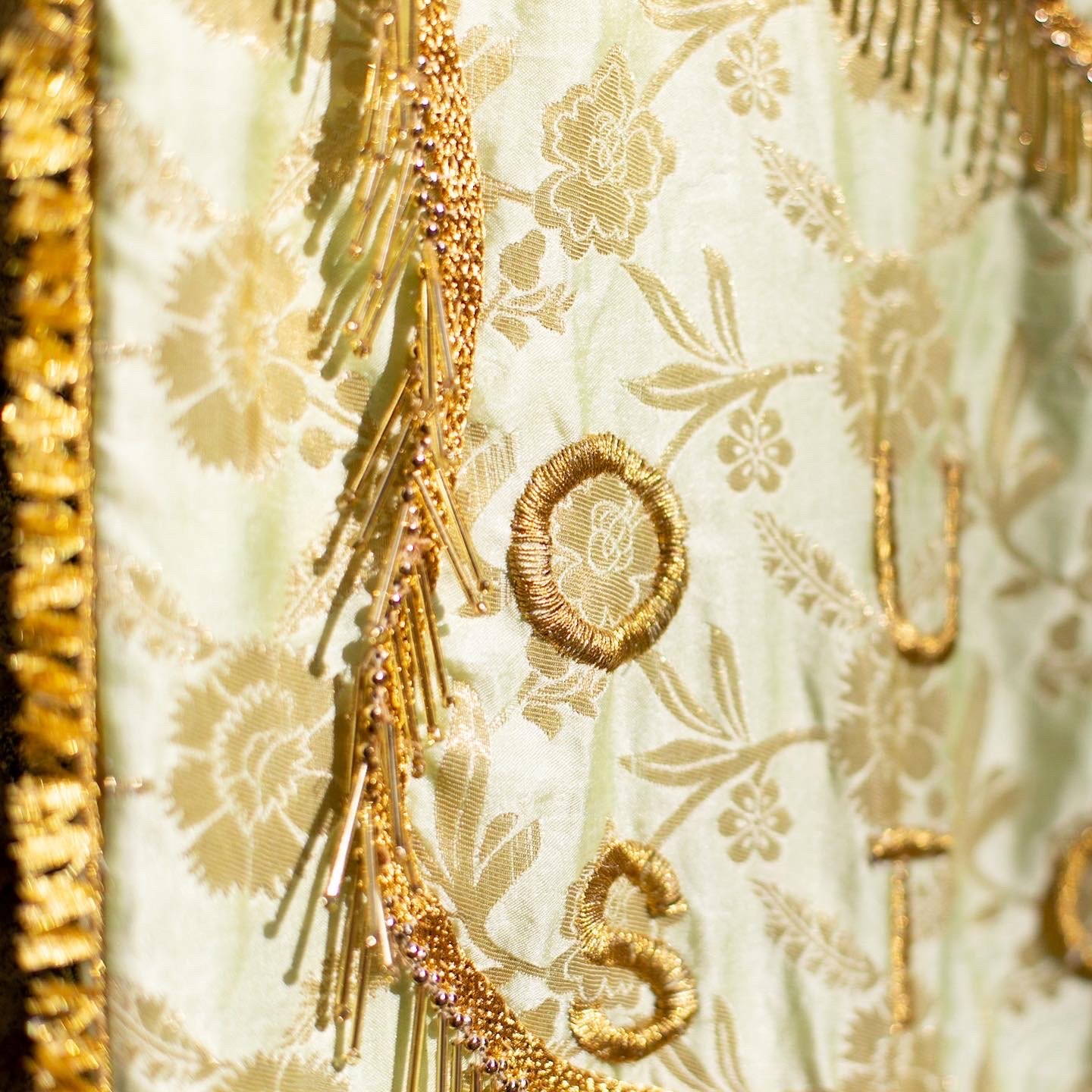
This work features materials sourced second hand from family and friends as well as from local markets in Mumbai, India. While in India during the pandemic I was struck by the number of formal wear shops and how they far out numbered casual wear. The culture of togetherness and celebration is incredibly strong there and I wondered how they might be surviving with no parties or weddings to attend. During the pandemic I haven’t even considered getting any new outfits, but I started gathering materials that would usually be slated for a new wedding or Eid outfit to make a new piece of art instead. The phrase stitched into the fabric “Our Stories Cannot Be Unlistened To” comes from thinking about finding connections through story sharing and the lasting impact of empathetic listening when physical connections feel distant and impossible.

Is It Not Enough (To Be Soft)?
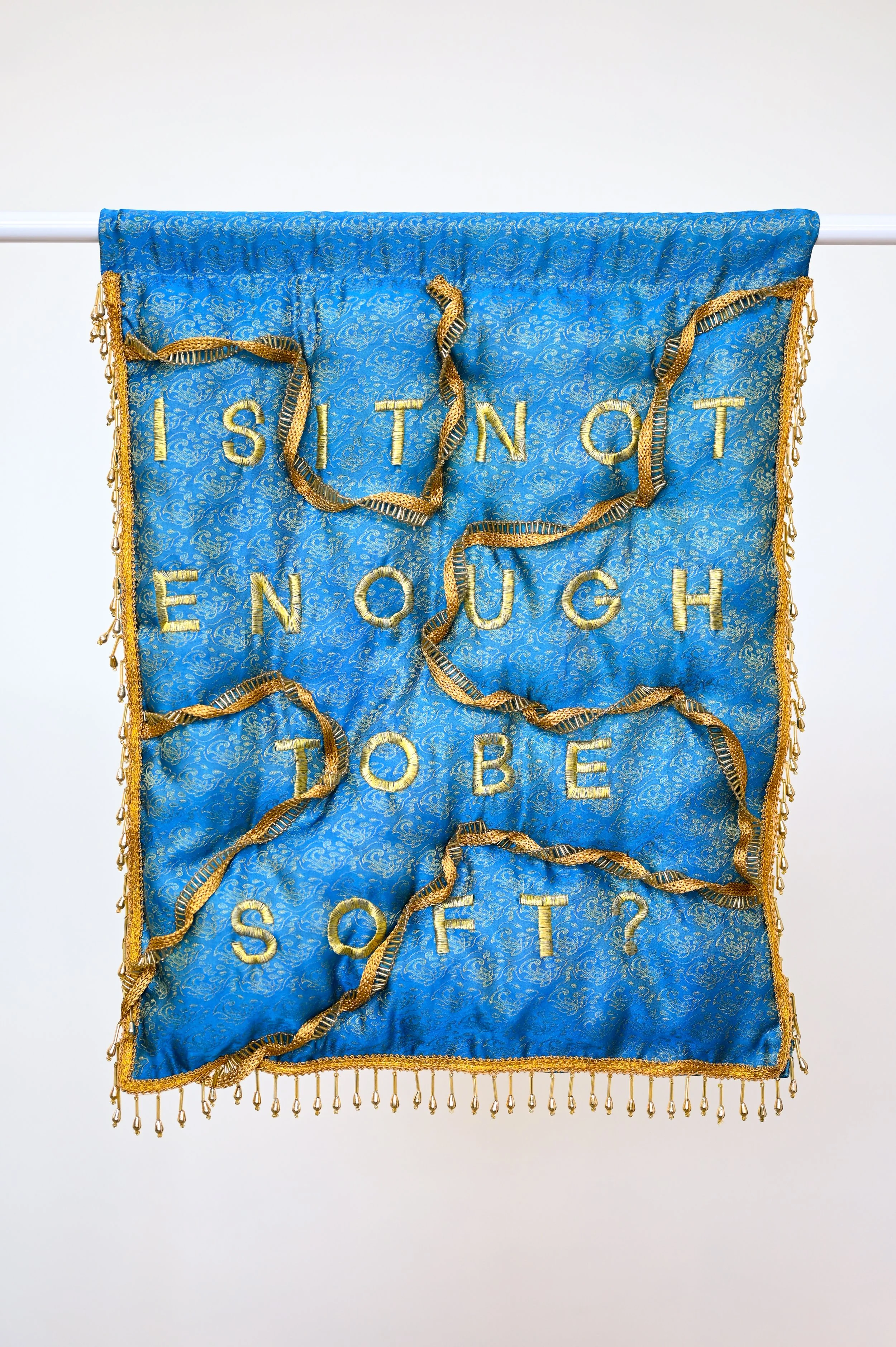
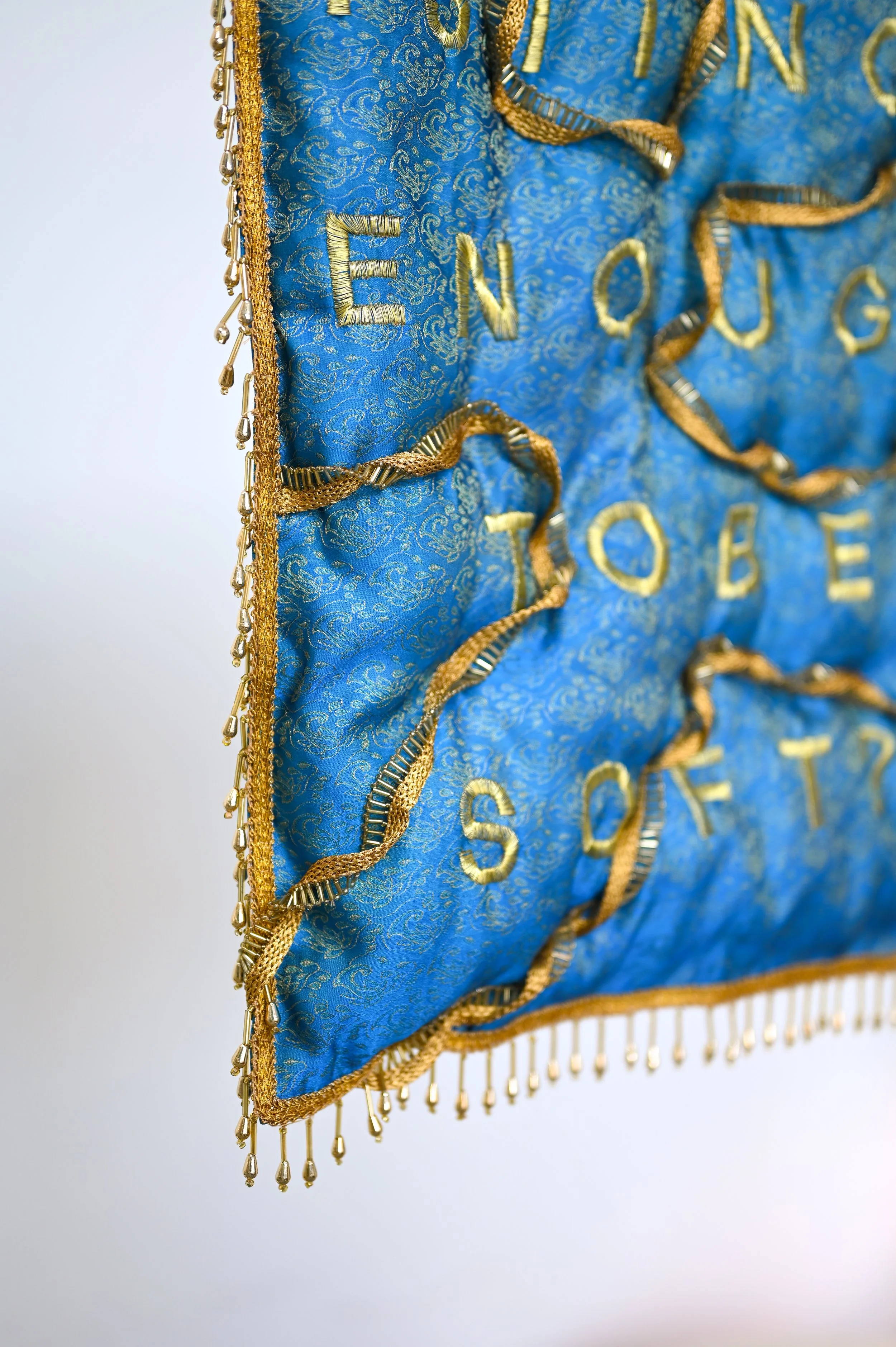
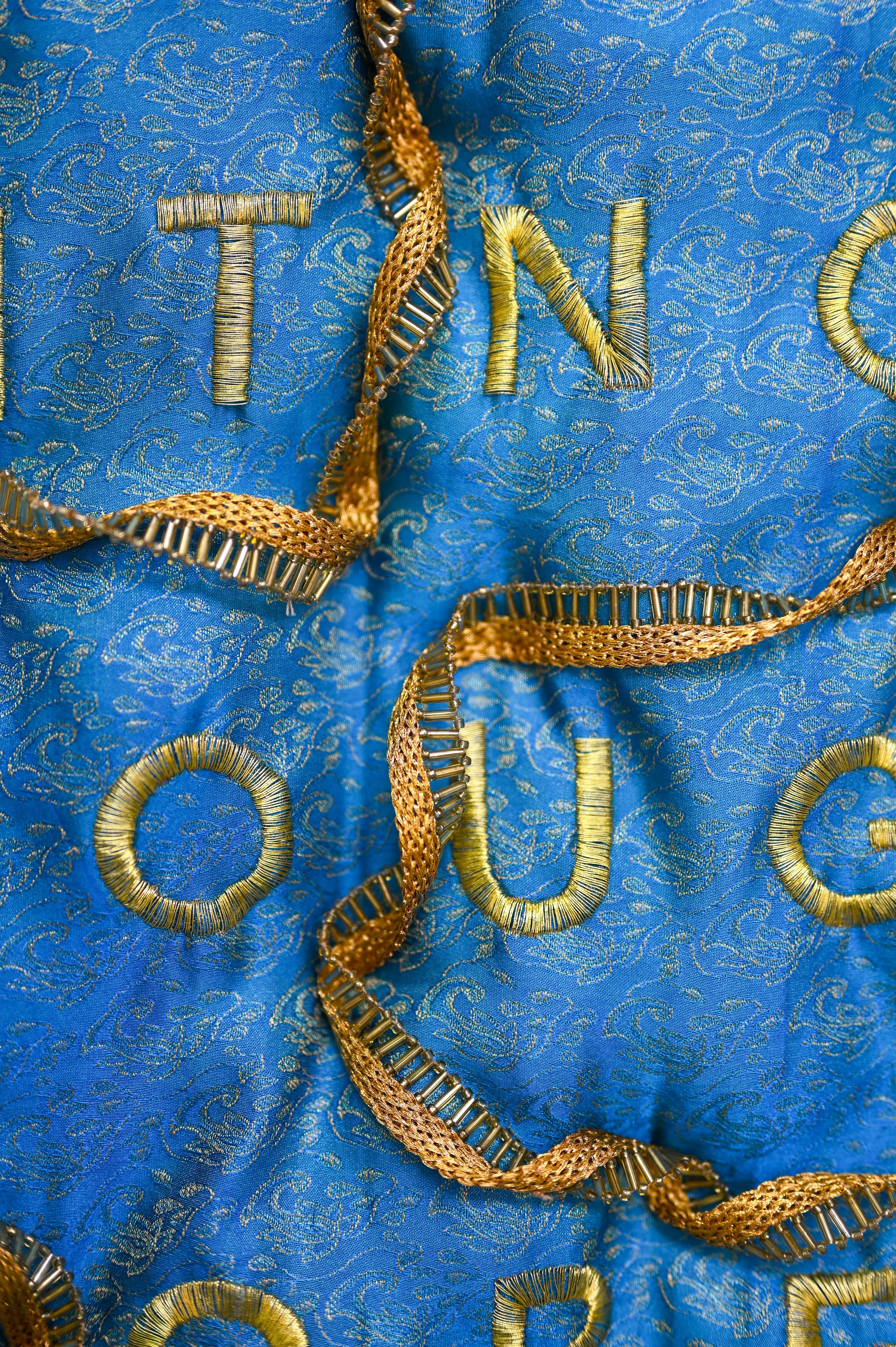
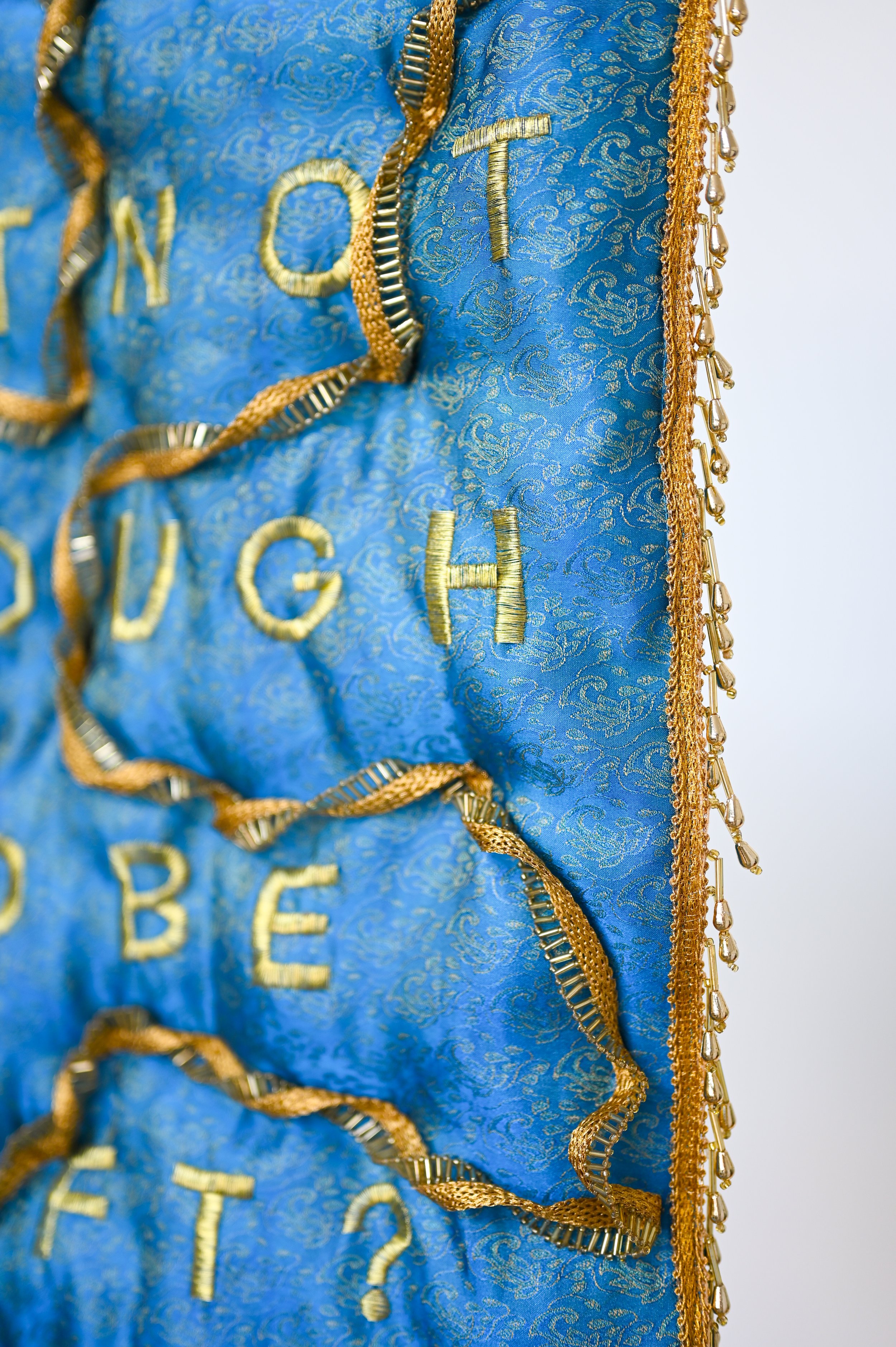
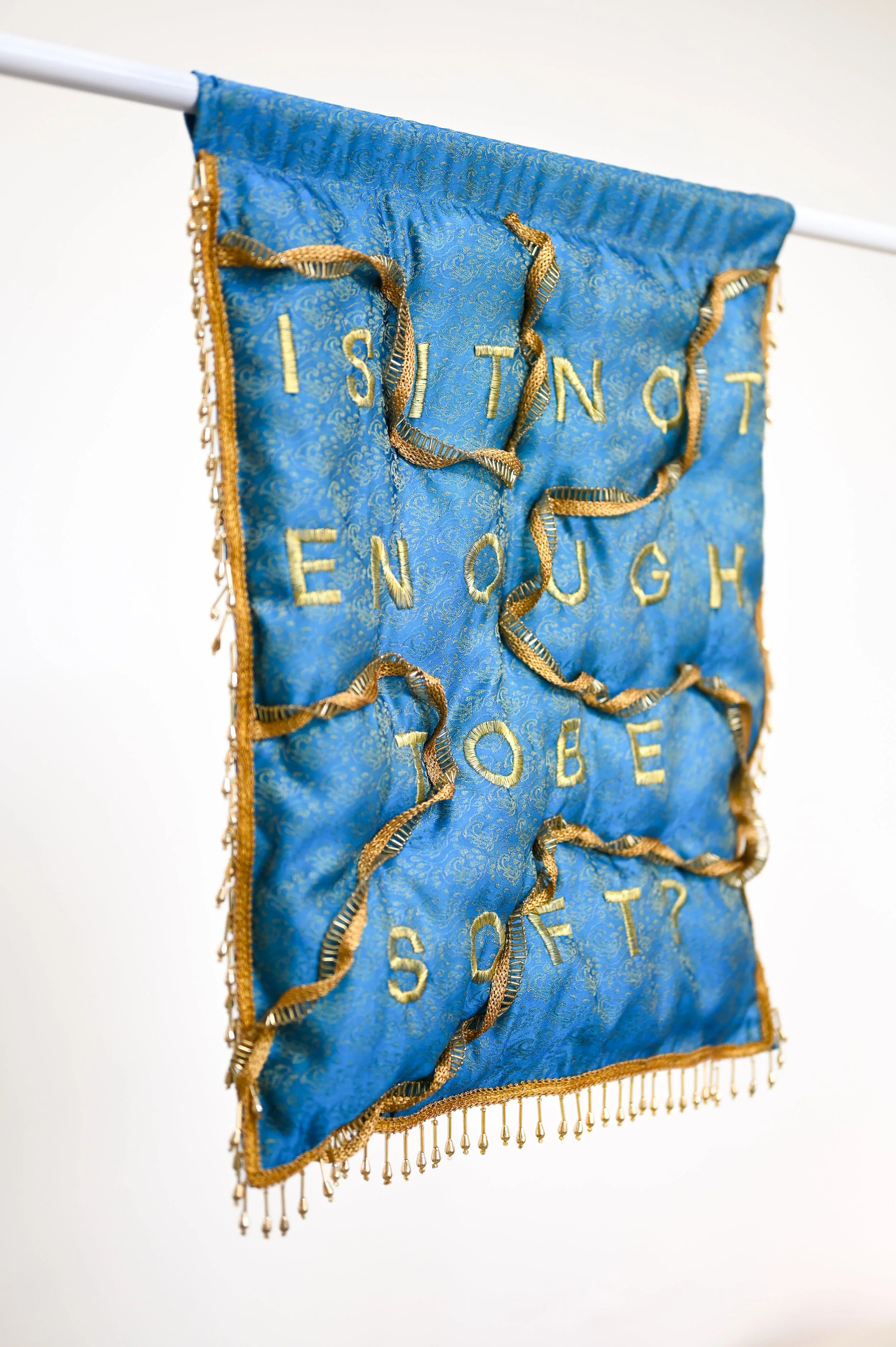
This piece asks a question that is meant to be both self-reflexive and a sincere plea to the viewer. Is it not enough to be soft? In a hyper- or post- capitalist (depending on who you ask) landscape the question of what is enough is inescapable, there always seems to be an imperative to be fitter, thinner, more productive, more critical, more cynical, just more at all times. The labour intensive process of embroidery allows time for reflection on the question of how we define worth and what the value of softness is – of soft touches, soft bellies, and soft words. The piece could be looked at as an object - a fancy cushion perhaps - but certain elements could also take on a living or human quality, the gold bead fringe are cilia that move an organism or the villi that absorb nutrients in the small intestine. The soft indents in the fabric are like that of a belly button or a yeasty rising dough. The twisting beadwork on the surface are roots, veins, or a helix in a strand of DNA. The question the piece asks belies a self consciousness that indicates it has a life beyond its purpose as an object, it questions the viewer about whether it is enough on its own, whether it is enough to simply exist.
Villain Era
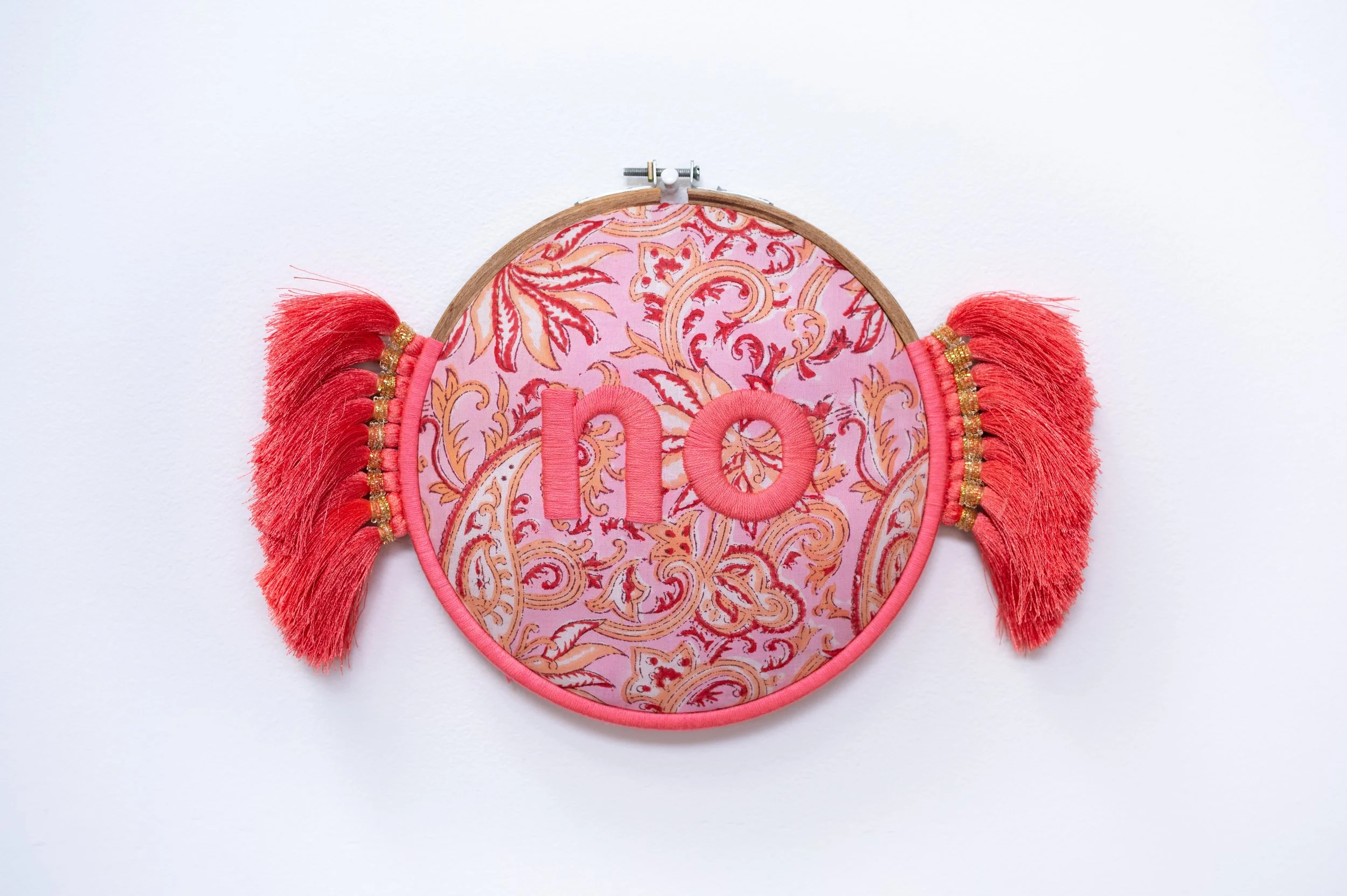
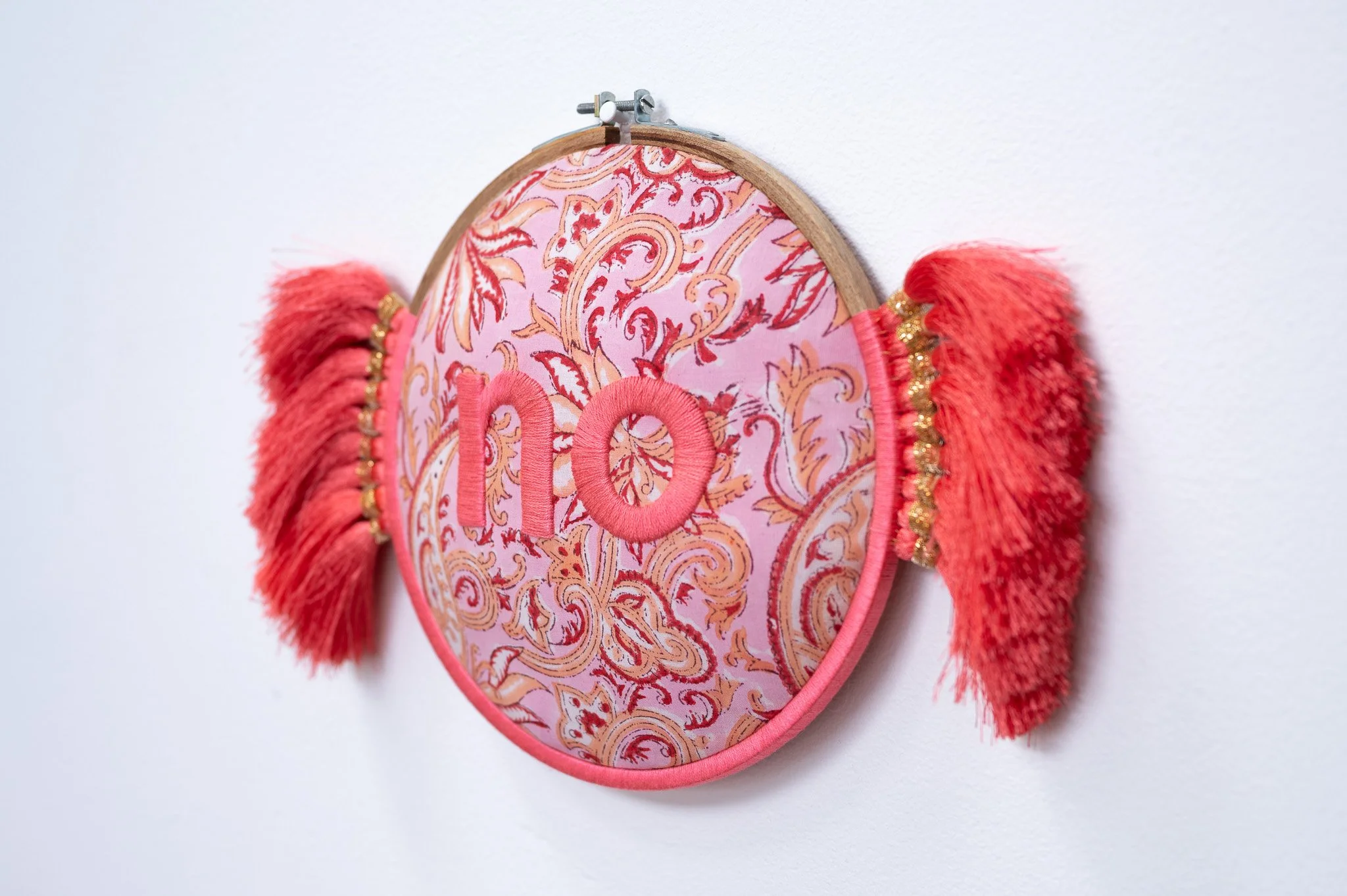
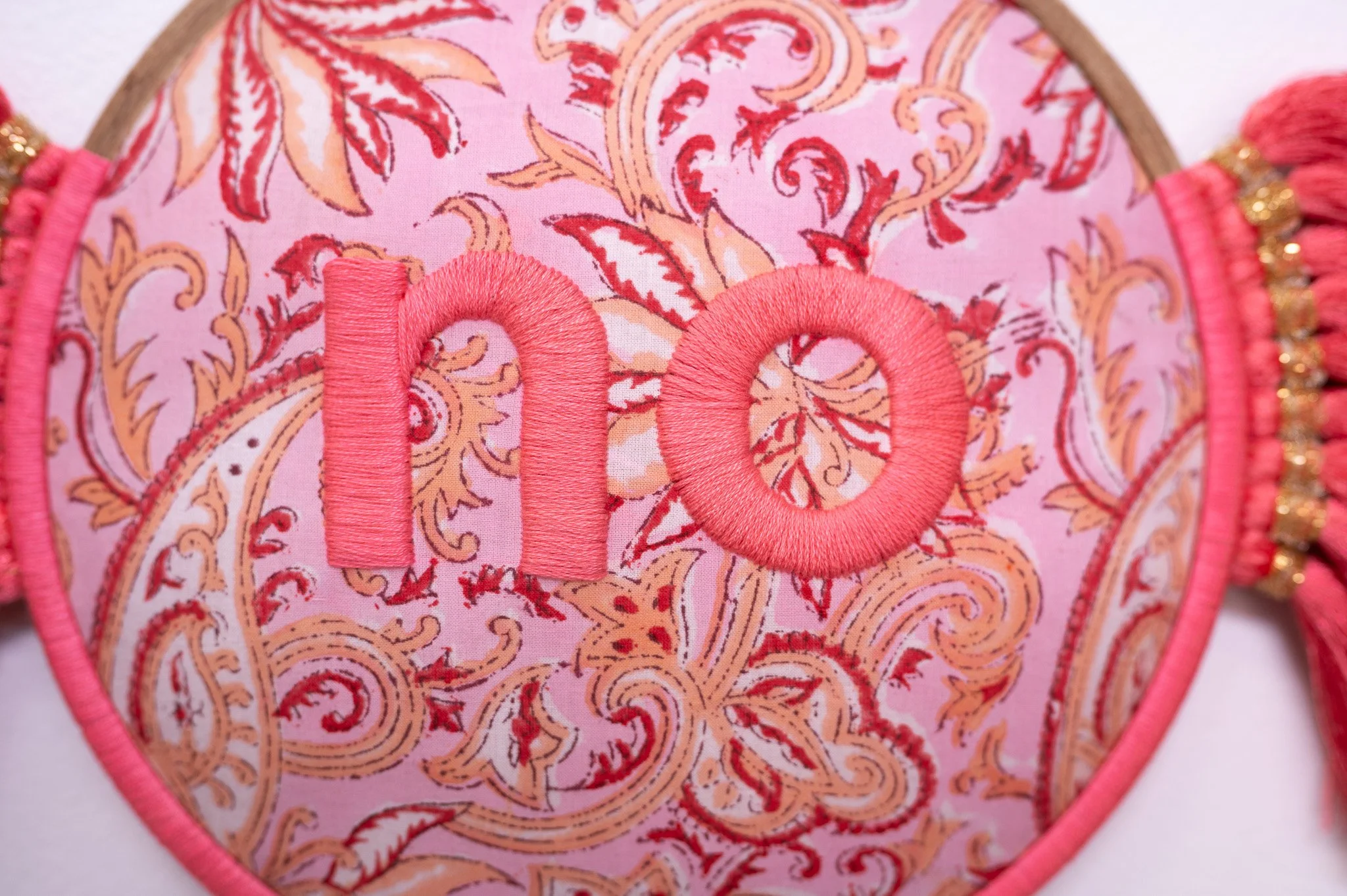
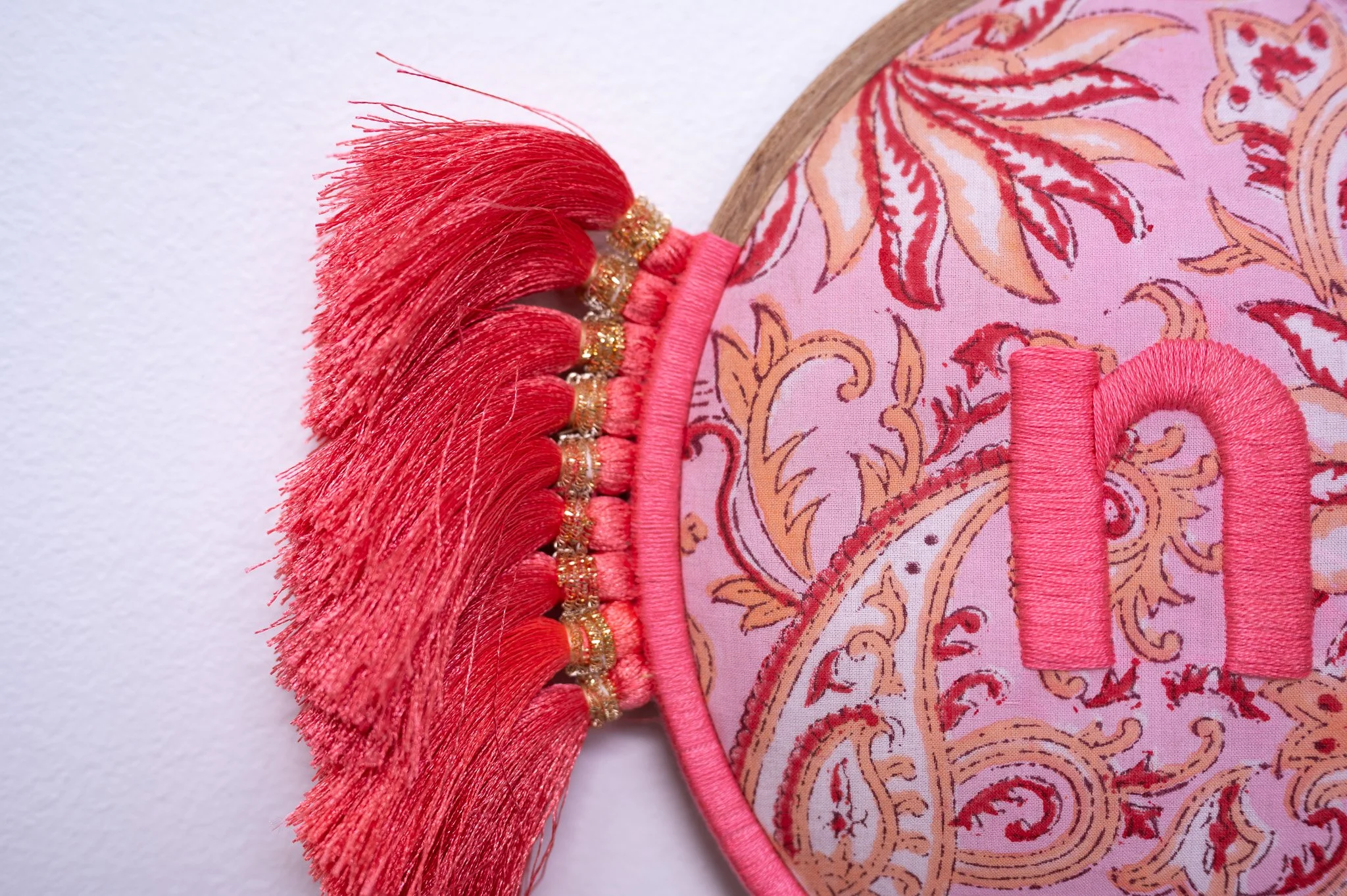
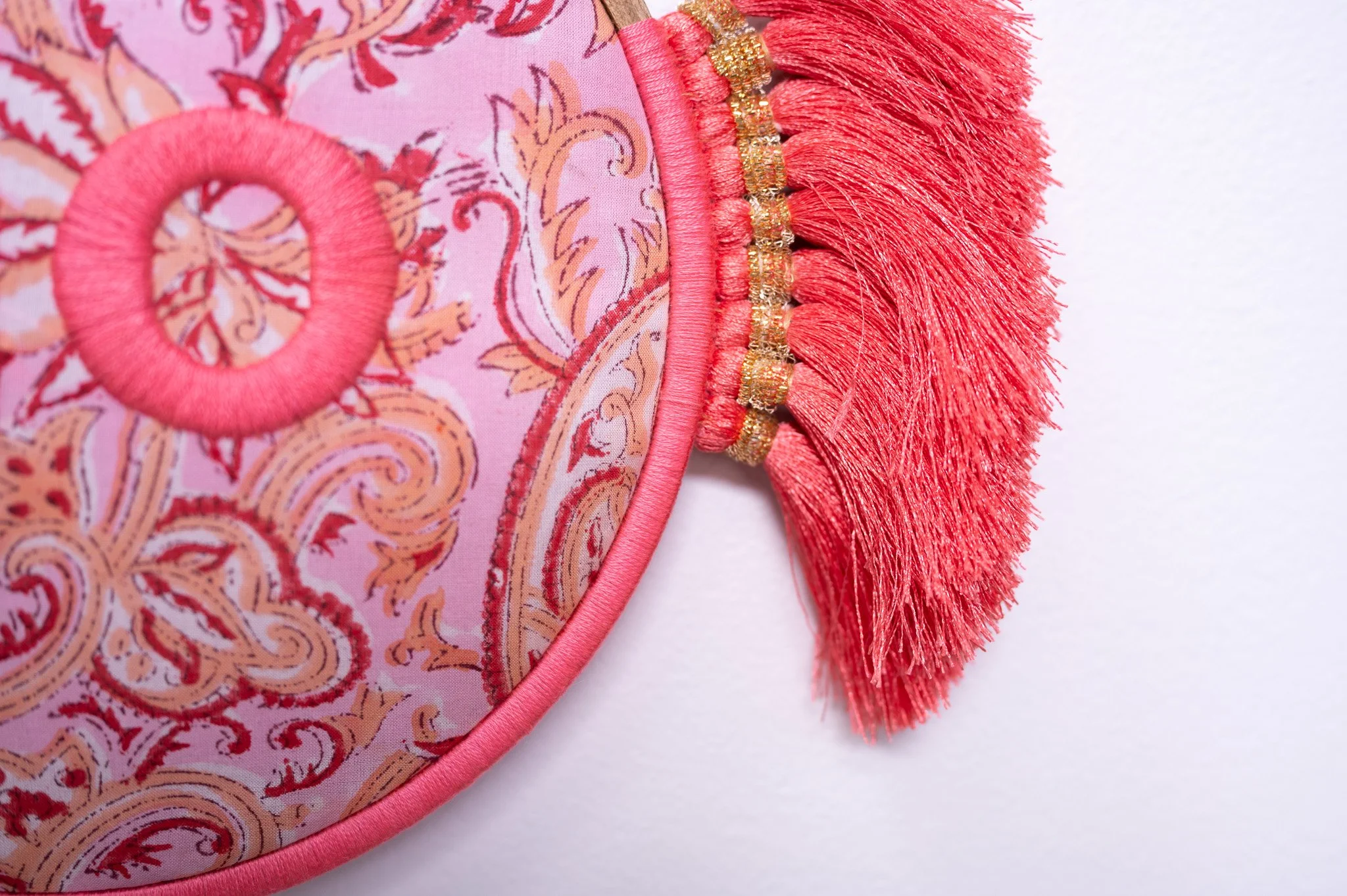
Why is it so hard to say no? Why do we need to dress it up, couch it in explanations, excuses, and justifications, or sandwich it between reassurances and flattery? Why do little girls have to swallow "no" for adults' feelings? Why do grown women need to worry about the "no" following them home and harming them? So, we say only the smallest, softest, quietest, prettiest "no" possible. It's a lowercase "no" meant to avoid offence, and, with enough pressure, become a “maybe” and then a "yes.” But, to deny is a practice of power even if it is whispered.
We’ll Laugh
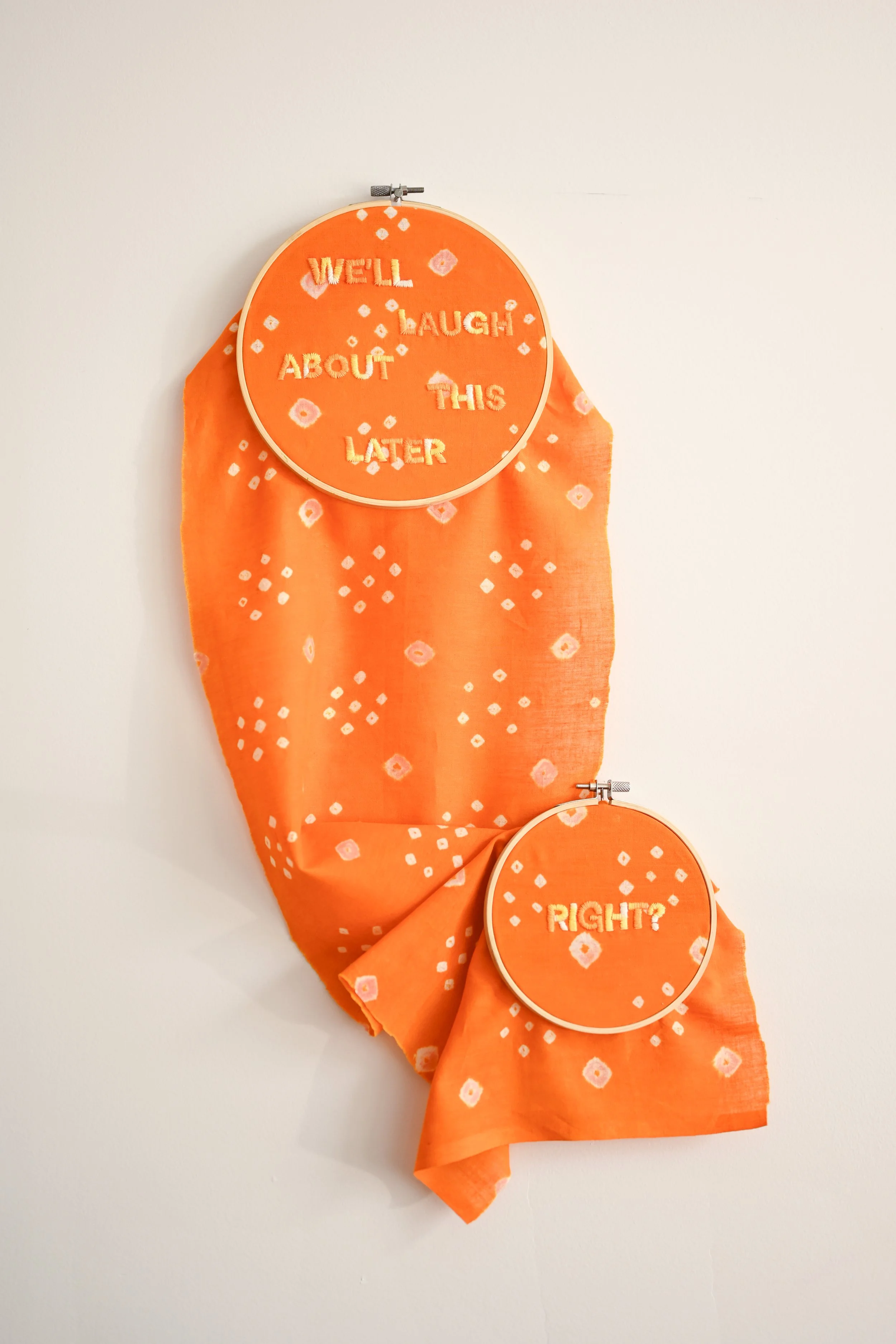
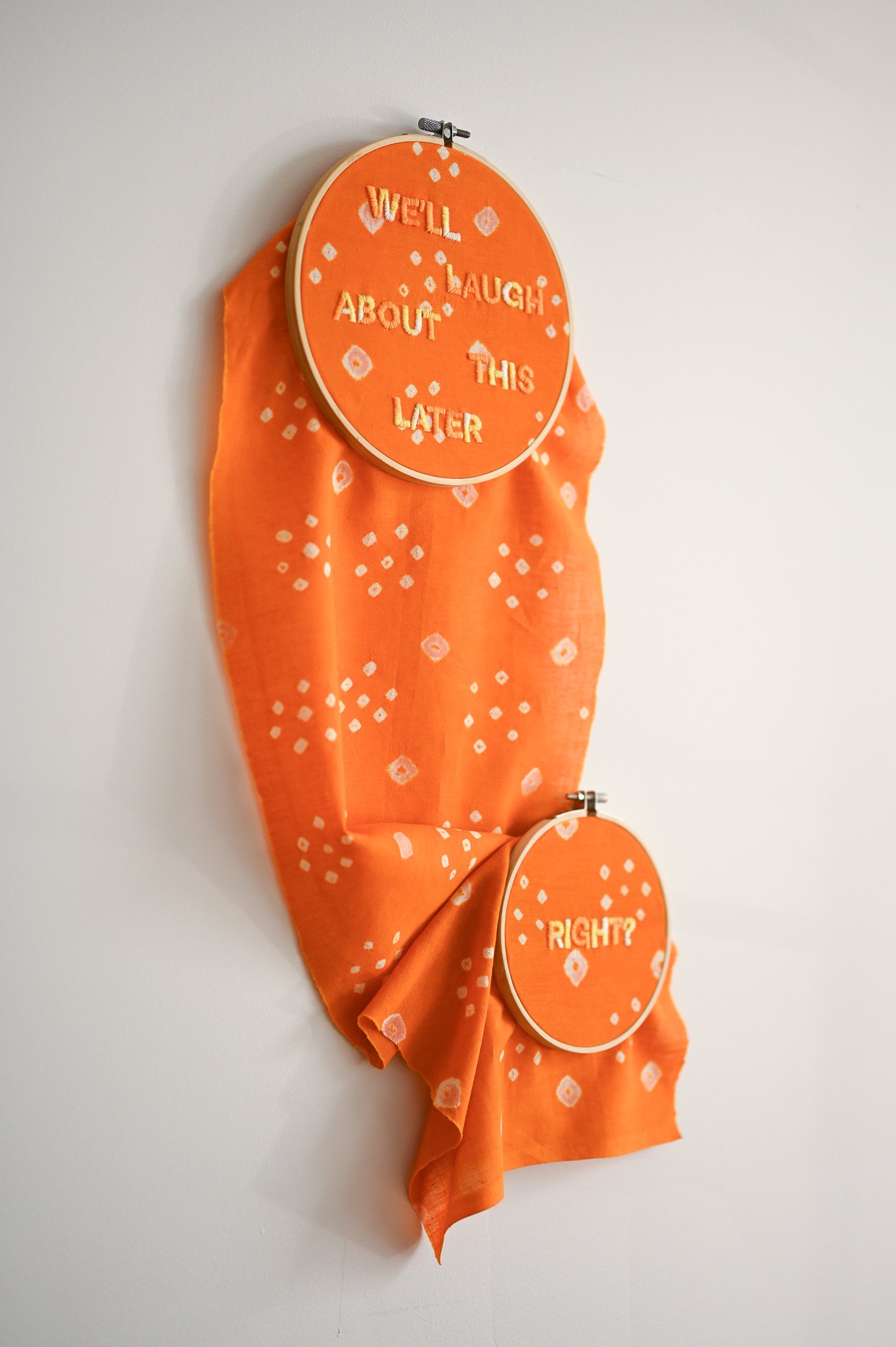
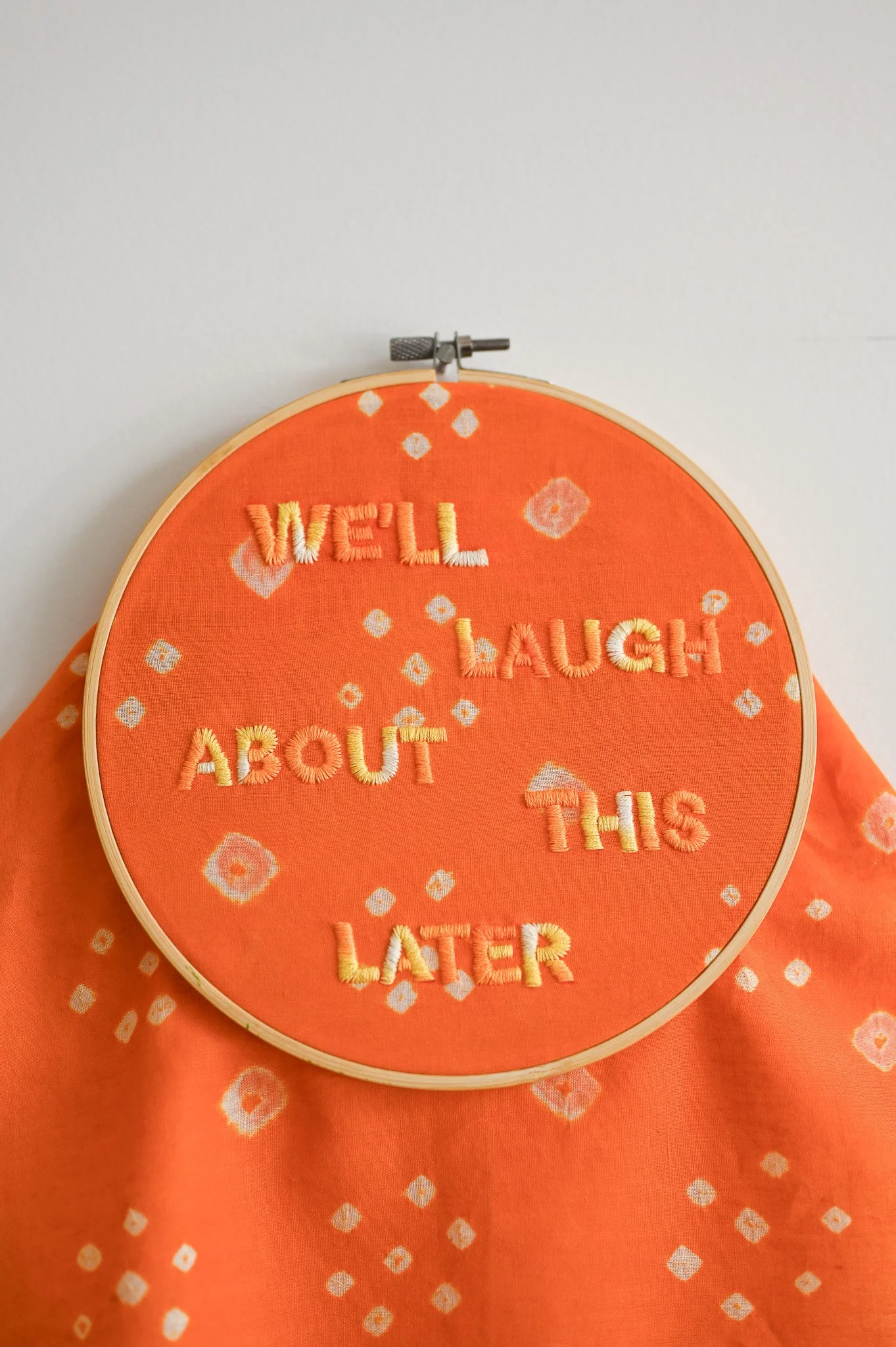
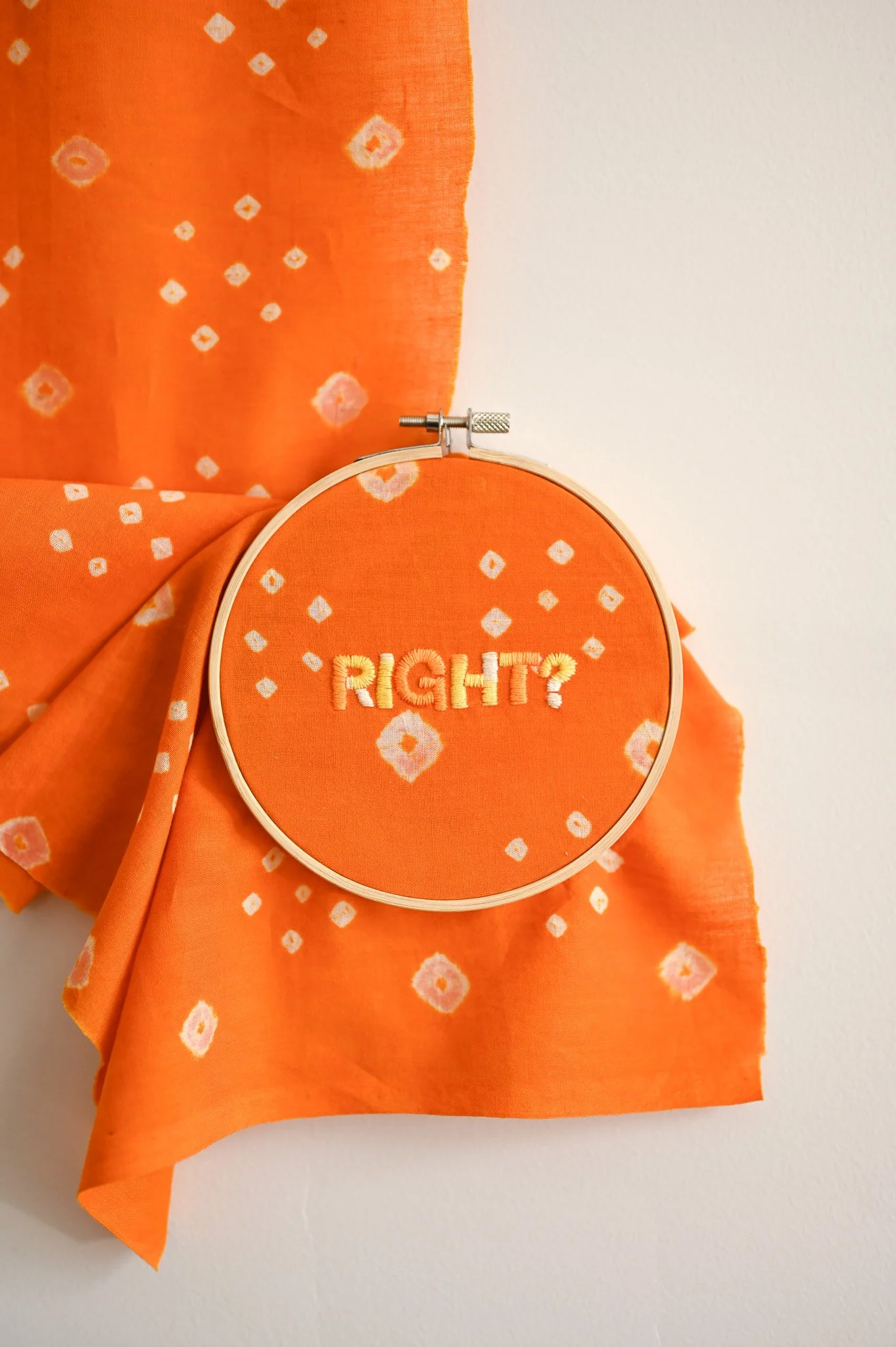
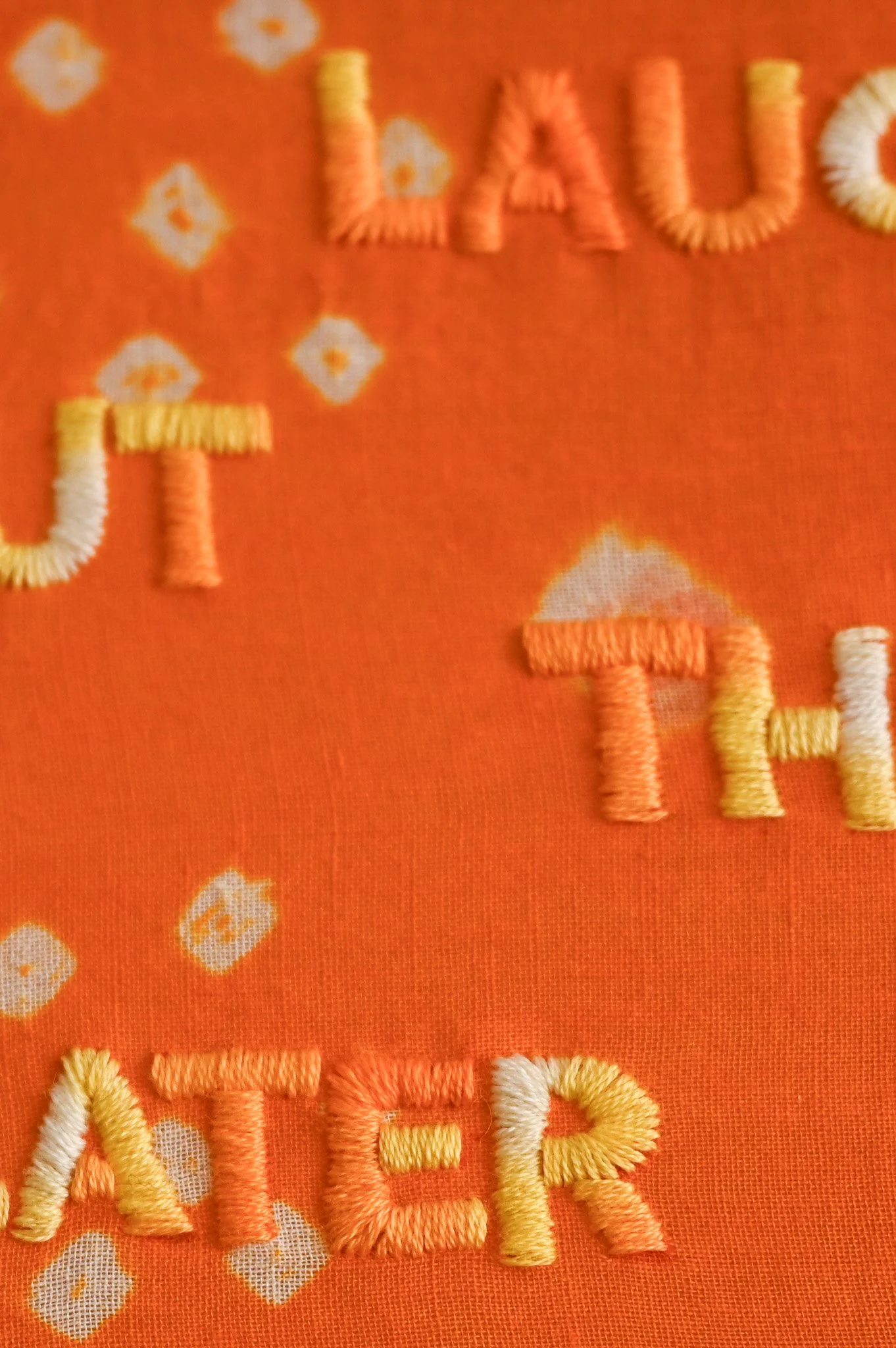
As we see history turning in on itself and repeating at an ever increasing rate, with “once in a lifetime” events stacking up, the future seems vague and ominous. This piece echos a collective attempt to cope, because if the future isn’t bright at least it might be funny.